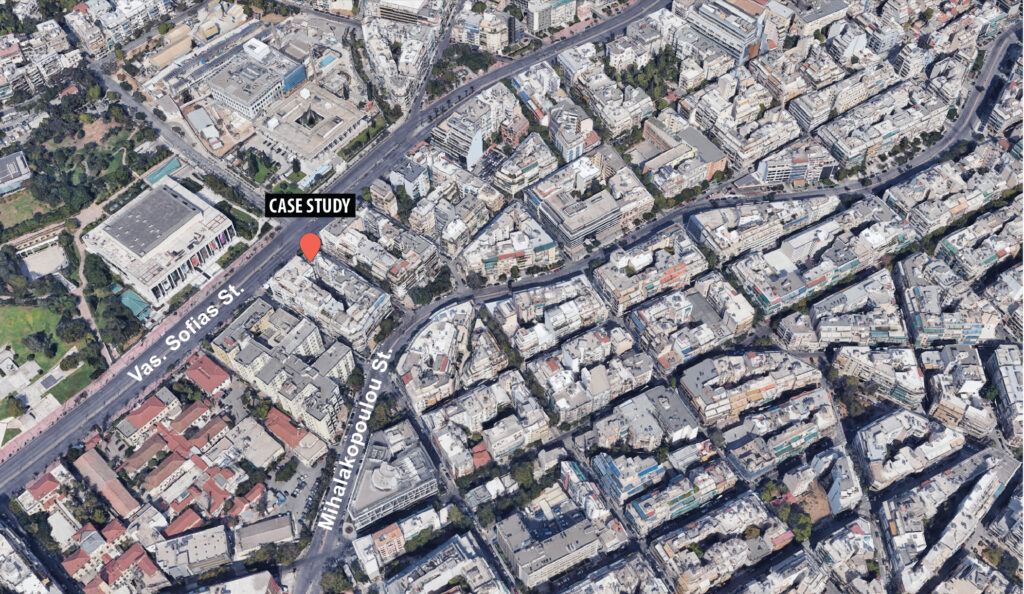
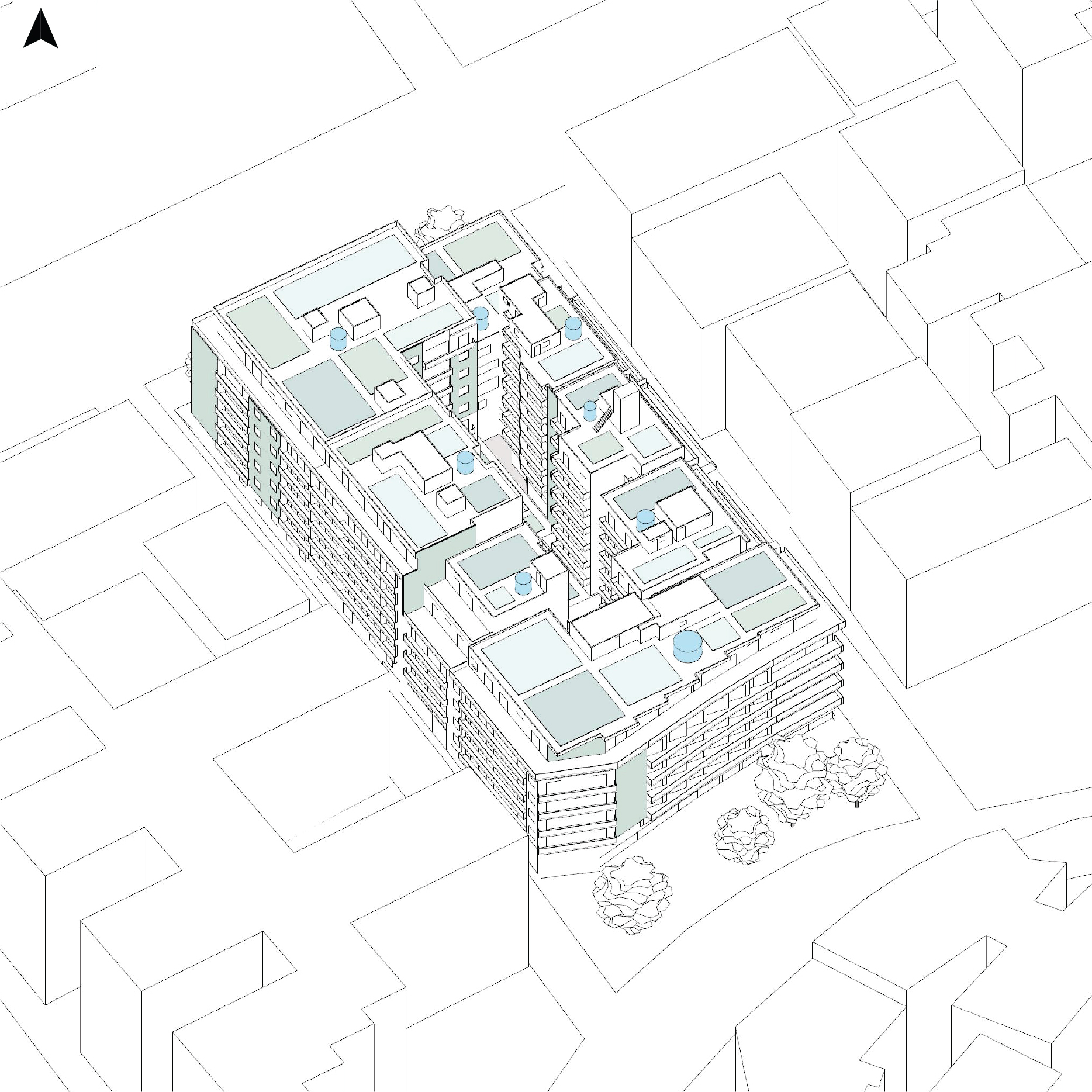
Location: Central Athens, near American Embassy and Athens Music Hall
Context: Typical Greek urban block with flat-roofed buildings and an inner block void
Model Testing on 2 Scenarios
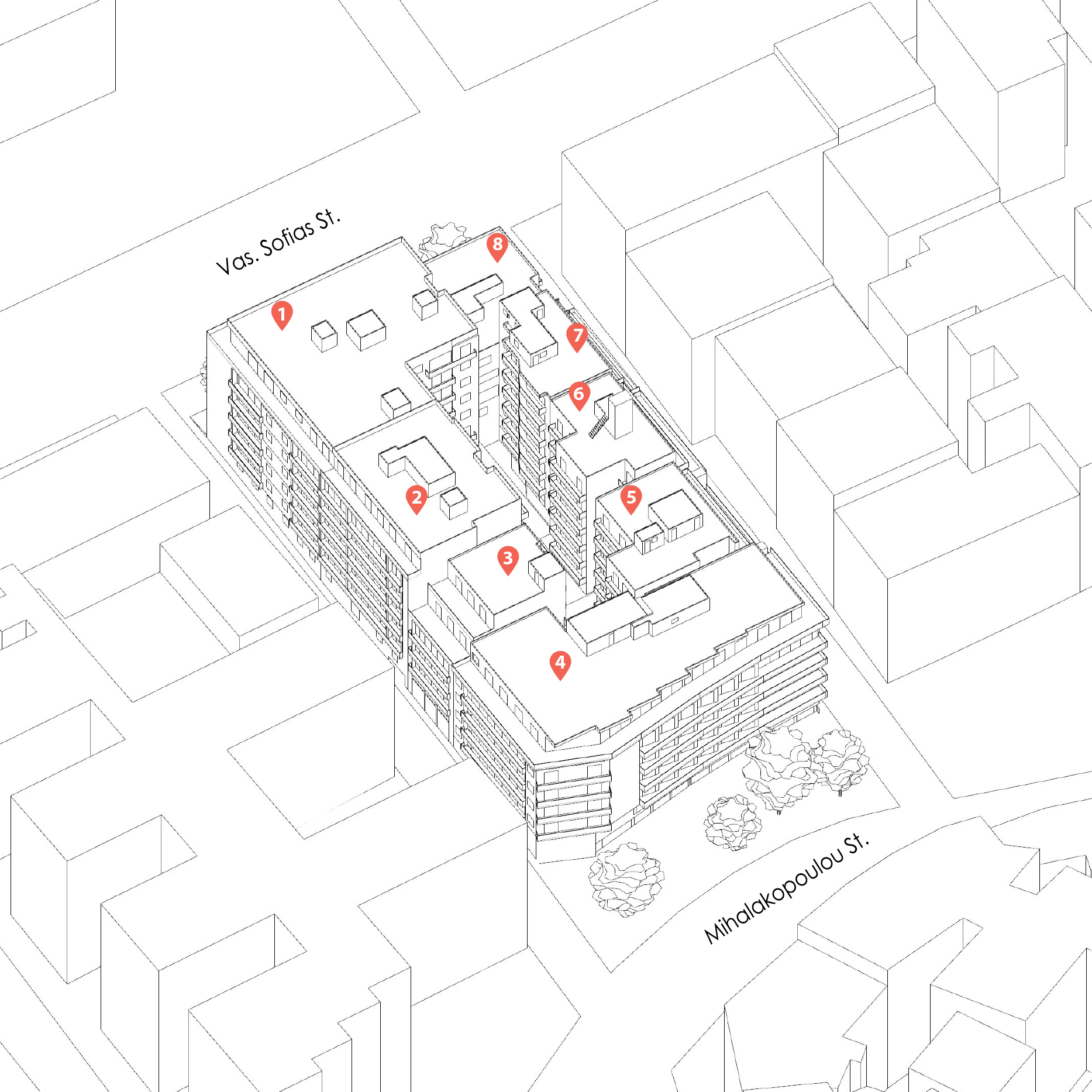
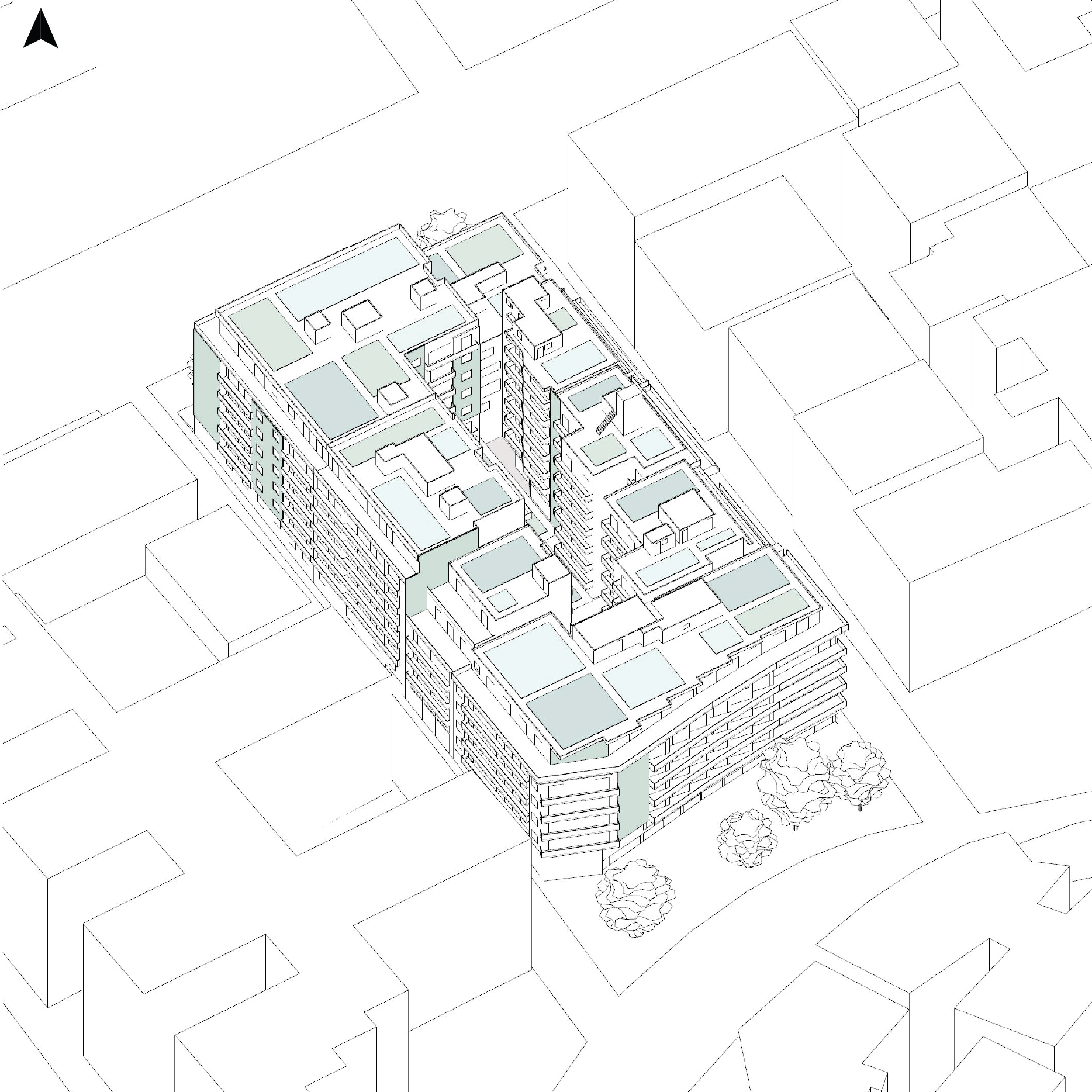
Two design scenarios were implemented and simulated using the MARSH model:
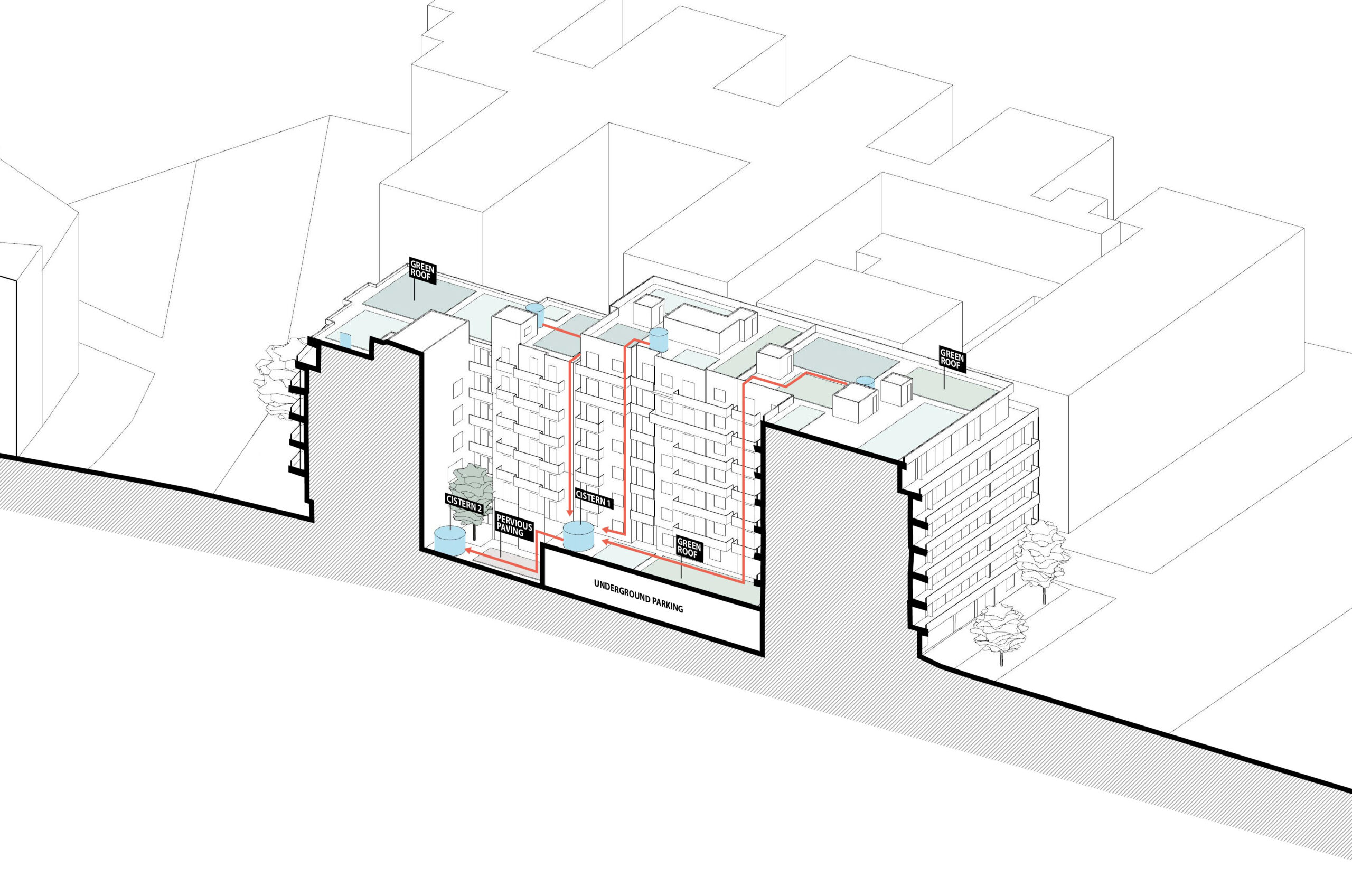
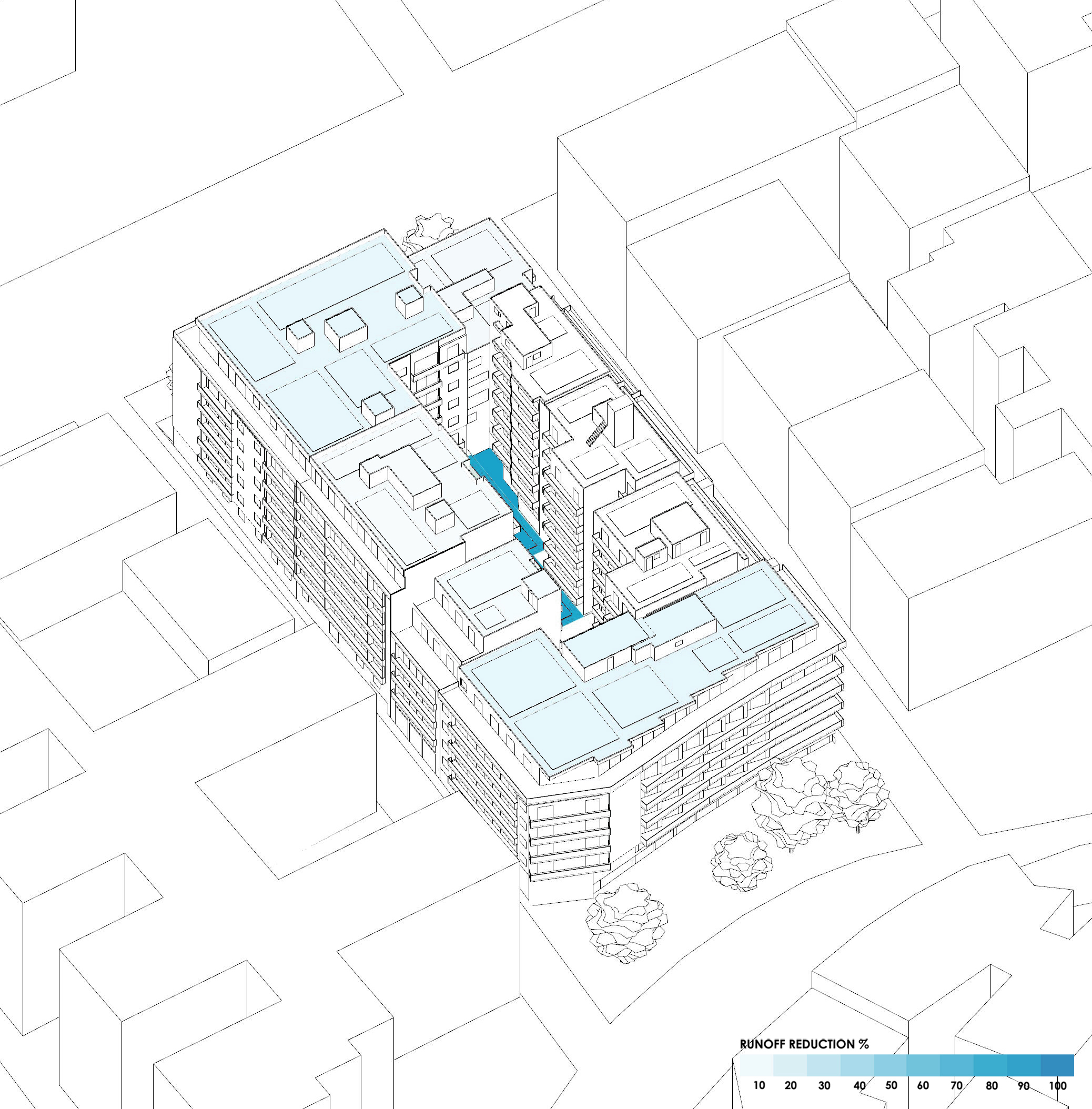
- Scenario 1 – Green roofs, living walls, permeable paving, and rain gardens without cisterns.
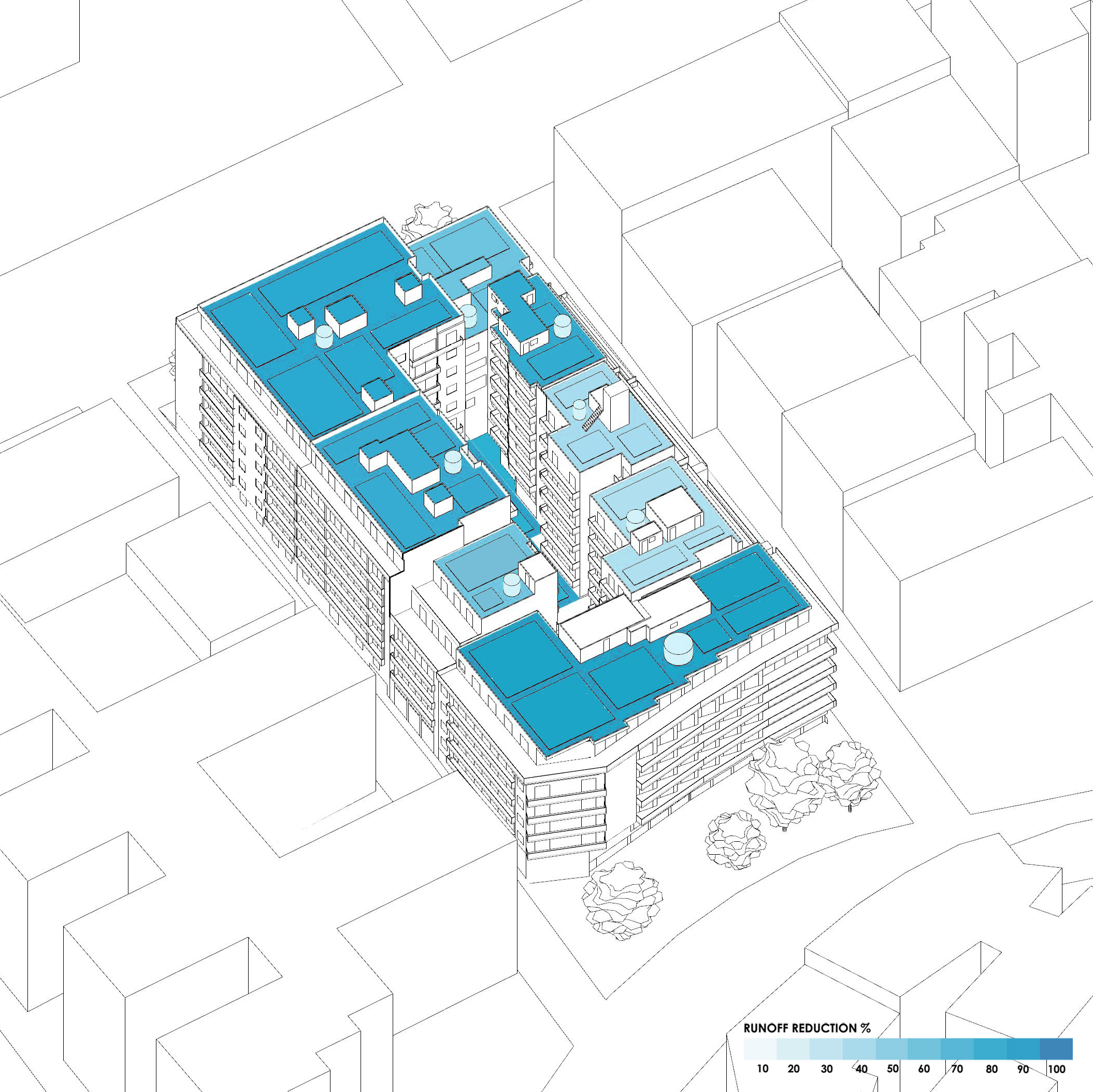
- Scenario 2 – Same BMPs plus rainwater harvesting cisterns on rooftops and in the inner blocked void.
Simulation Results
- Runoff Reduction:
- Scenario 1 (no cisterns): 15-30% runoff reduction on rooftops; 77% in inner block void
- Scenario 2 (with cisterns): 62-86% rooftop runoff reduction; up to 85% in inner block void
- Scenario 1 (no cisterns): 15-30% runoff reduction on rooftops; 77% in inner block void
- Irrigation Sources:
- Scenario 1: Mostly network water supply; precipitation covers 5-9%
- Scenario 2: Significant use of stored rainwater (13-36% on rooftops) reducing network water dependency
- Scenario 1: Mostly network water supply; precipitation covers 5-9%
- Seasonal Highlights:
- Summer: Scenario 2 achieves close to 100% runoff capture; cisterns vital for irrigation during dry periods
- Autumn & Winter: Cisterns greatly reduce runoff and network water use, adapting to moderate rainfall
- Spring: Cisterns provide 15-79% of irrigation water, primarily replenished through winter recharge
- Summer: Scenario 2 achieves close to 100% runoff capture; cisterns vital for irrigation during dry periods
Conclusion:
Integrating rainwater harvesting with green infrastructure greatly enhances urban water sustainability and irrigation efficiency, providing a scalable model for cities confronting water scarcity.